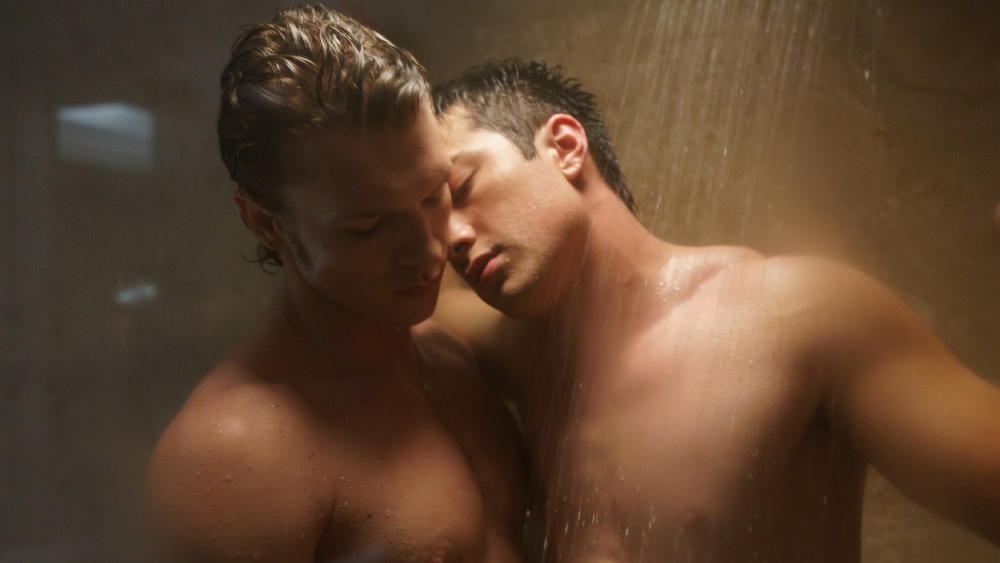
While I’m not a full citizen of Romancelandia, nor am I a gay man, I’m adjacent enough to both nations online that I heard excited murmurs about Heated Rivalry soon after it premiered in the U.S. on HBO Max. The Canadian show, based on a romance novel of the same name by Rachel Reid, quickly made waves for its sheer volume of sex scenes. It follows the years-long, intermittent illicit affair between rival professional hockey players Ilya Rozanov (Connor Storrie) and Shane Hollander (Hudson Williams). Word in my corner of the internet was near ecstatic, from the praise of the electric chemistry between the leads to the pleased incredulity at the amount of sucking and fucking taking place on screen. (My personal favorite was podcaster Michael Hobbes posting on Bluesky that Heated Rivalry “is the first show I’ve seen where a sex scene fades to black then fades in again and they’re still going at it.”)
I asked my friend if she was going to watch “the gay hockey show,” since we’re both enemies-to-lovers trash and irredeemable enjoyers of male/male romance. I was skeptical that it was actually that good. I’m not a sports romance girlie, first of all, and I have been burned way too many times by BookTok declaring something “worth it” when it is, in fact, absolutely not. My friend started Heated Rivalry a couple of days later and reported back to me gleefully, “Omg this is just softcore porn.” Her review sold me instantly. If my friend says it, I believe it.
As far as I’m concerned, any adaptation of a romance novel should be softcore porn. Of course, the genre accommodates a spectrum of explicitness—while I personally find closed-door romances supremely boring, they do exist—but I think Williams said it best in a recent interview with The Hollywood Reporter. When asked what he knew of the story before the casting process, Williams admitted that he was a newcomer to the world of “hockey smut.” He then went further, saying, “I wasn’t even very familiar with how these women-catered romance genres, how fucking vulgar they are. … They get so nasty and descriptive. It’s beautiful, and I love it. But holy fuck, I just didn’t realize that was the level.” Welcome to the big, wide world of romance, babe. The fastest-growing section in your local bookstore is chock full of cock. (The sapphic options increase by the day, but for now romance remains mostly for connoisseurs of dick.)
In general, romances must focus on a love story, which disambiguates them from the larger, umbrella category of erotica. I would also add the caveat that romance is a pretty fetish-free zone, at least in terms of what the characters themselves profess to find sexy. But this is not to say that these books cannot have an enormous amount and variety of fucking in them. Romance, in its highest and purest form, treats sex scenes as analogous to the song and dance in musicals. Obviously, the sex scenes are a main attraction and defining feature of the genre. But also, when the feelings are just too much, when there’s no other way to say it, there’s the sex. Maybe it’s a slow burn romance that crescendos with a multi-chapter sex scene where the leads finally say, “I love you” and then blow each other’s backs out. It could be a “fucking first, love later” situation, but the fucking is so good that it must be true love. Perhaps an emotionally unavailable character’s vulnerability only slips out in bed.
One could criticize this approach, tying sex to love as grandly as it does, for implicitly reinforcing gendered stereotypes about how women enjoy sex and what they want out of it. But one could never make a persuasive argument that the sex scenes are not important in a romance novel. This formulation doesn’t allow for such a thing as a meaningless sex scene.
It’s been frustrating, then, to see the deprioritization of the sex scenes in recent adaptations of romance novels. Adapting a romance novel of the Harlequin variety for the screen would probably never have crossed anyone’s mind even ten years ago; but in the last several years, erotic romance has exploded in mainstream popularity. BookTok—currently one of the biggest forces in the publishing industry—is in no small part users recommending smut to one another. Blockbuster romantasy series fuel the overall growth of print book sales. Brick and mortar bookstores dedicated solely to romance titles have become the hottest new trend in boutique bookselling. If romance is making money for the publishers, you can bet your boots that Hollywood wants a piece of that pie.
But several problems have arisen as Hollywood has tried to get in on the romance bonanza. While it used to be conventional wisdom that “sex sells,” mainstream Hollywood productions have been thoroughly, systematically de-sexed in the last decade. Sex scenes don’t move the plot forward, remember? Except, in romance, they are the plot. An industry that has adopted an outright hostile attitude towards erotic content is not equipped to take on the romance genre in all of its softcore glory.
In addition to the general discomfort with sexually explicit material, Hollywood has also historically struggled to understand that women do, in fact, like having and watching sex. There is simply no mainstream cinematic tradition of sexually explicit material made to turn female viewers on. Surely we could cobble together a canon—and plenty have tried—of horny movies for women who desire men. But there’s not a category. There’s no shorthand. Romance, despite its limitations, is and always has been an entire mass-market genre of literature that exists expressly to turn women on. To me, that’s still, unfortunately, inherently radical, even if the contents of the books themselves may not always be.
Without exception, I pick up a romance novel because I want to be turned on by the sex scenes; but Hollywood execs find this thought too crazy to give credence. From Hallmark romances to sexless straight-to-streaming romcoms to Magic Mike XXL, Hollywood keeps underestimating how much sex women like to watch. So many films and shows about “female desire” insist that what (largely presumed straight) women want is anything but sex. We want to yearn. We want emotionally vulnerable men. We want relationships with balanced power dynamics. On the less progressive end of the spectrum, we want a man to protect us and take care of us financially. And on and on and on. All of these things are probably true to some degree—although I know plenty of women, myself included, who prefer their fictional men much less wholesome—but why must all of our romantic fantasies be so nonsexual?
Even films and television shows that profess to be for the horny ladies, like the aforementioned Magic Mike XXL, remain shockingly devoid of actual sex scenes. I love all the Magic Mike films, don’t get me wrong, but I want Big Dick Richie (Joe Manganiello) and Nancy’s (Andie MacDowell) spinoff sex tape. These dancers fuck! Throw me a gratuitous bone! It’s as if Hollywood can’t comprehend that explicitly shown sex scenes don’t ruin the fantasy for women, despite the existence of a few wildly popular case studies that prove the opposite. Instead of treating the massive successes of shows like True Blood or Outlander as a template, cultural commentators and Hollywood executives bend over backwards to figure out what, other than the sex, made these shows a hit with female viewers. (It was the sex, guys. At least Alexander Skarsgård knew it and ran with it.) So it’s no wonder, then, that adapting romance novels has proven nigh impossible for Hollywood to get right.
The Fifty Shades of Grey trilogy marks one of Hollywood’s earlier attempts to cash in on the popularity of more erotic entries into the romance genre. While no one involved with those films was able to make anything interesting out of the dismal source material, the movies did make money. The terrible quality of E.L. James’ books and their subsequent film adaptations, however, only helped to keep the perception of romance and the women who enjoy it as low as possible. The current mini-boom of “spicy” romance adaptations truly began in 2020 with the premiere of Netflix’s juggernaut hit Bridgerton.
The show’s first season debuted in December, shocking/delighting everyone and their mother with its many, many sex scenes. Since Bridgerton is adapted from a series of romance novels by Julia Quinn, perhaps the sexual content of the show shouldn’t have been such a stunner. Viewers who don’t read Avon titles, however, may have been expecting the “Regency romance” of Bridgerton to have more in common with Jane Austen than the bodice rippers your mom hid in her nightstand.
I have my issues with the first season of Bridgerton (its gross mishandling of issues of male consent chief among them), but at least season one was bracingly, unapologetically horny. Even if there were moments where the show seemed embarrassed of its roots, the general attitude was one of sheepishness rather than disavowal. Season-one Bridgerton would blush but still hand you its favorite smutty book if you told it that you liked romance novels. Season-two Bridgerton, however, would roll its eyes and tell you it doesn’t read “those kinds” of books.
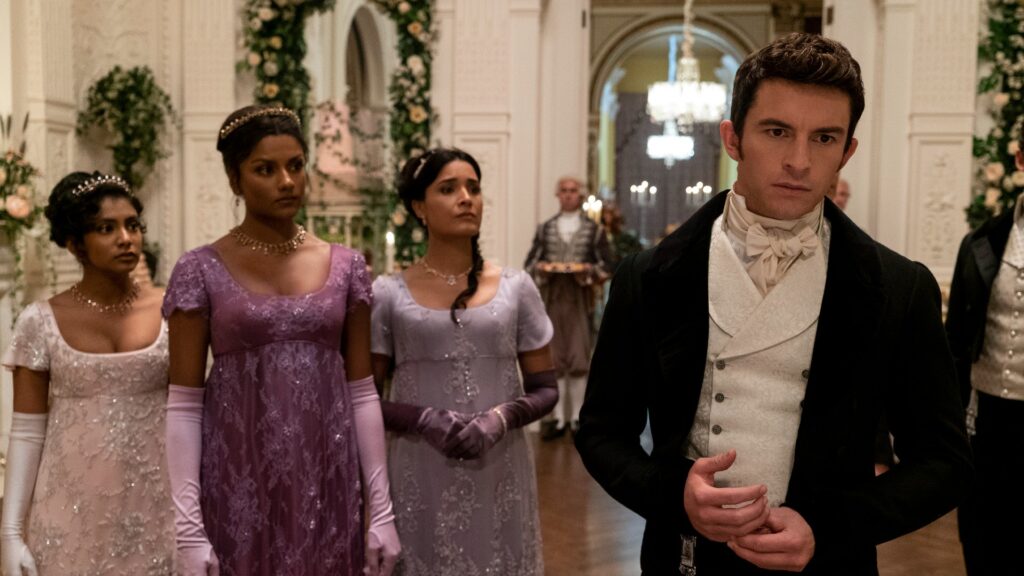
It’s not just about the number of sex scenes—although the number is greatly reduced in season two. It’s the degree to which the series is about sex. Yes, Anthony Bridgerton’s (played by none other than People’s reigning Sexiest Man Alive Jonathan Bailey) plans to marry Edwina (Charithra Chandran) are spectacularly upended because of his lust for her sister Kate (Simone Ashley); but the series, notably, never explicitly puts it in those terms. Which is weird, because we spent all of season one watching Anthony getting down all over the place with his opera-singer paramour Siena (Sabrina Bartlett), so we know the man’s not a prude.
Take Anthony’s beloved “bane of my existence” monologue as an example of what I mean. In the scene, Kate confronts Anthony about ending his engagement with Edwina after doggedly chasing the match. Anthony says he cannot marry Edwina because it will bind him too closely to Kate, to whom he is distractingly, inappropriately attracted. “You are the bane of my existence. And the object of all my desires. Night and day I dream of you. And what I… do you even know all the ways a lady can be seduced? The things I could teach you.” Anthony stops short of describing what he imagines when he dreams of Kate.
Compare this to Simon (Regé-Jean Page) casually giving Daphne (Phoebe Dynevor) basic instructions for masturbation in season one, and you can see where season two’s shy new attitude towards sex comes in. “You are the bane of my existence and the object of all my desires” should be a moment of escalation. In another charged encounter in the previous episode, Anthony asks Kate if she wants him to stop telling her how mad she’s driving him. He wants to know, essentially, if she wants him to stop pursuing her. (This, apparently, was an addition to the script suggested by Bailey himself. It’s one of the few genuinely hot moments in the whole season.) She says she doesn’t want him to stop. But stop what exactly? Staring at her from across the room? Kate’s given her consent, and she’s basically admitted that the attraction is mutual. So why doesn’t Anthony let himself whisper some of his obviously filthy thoughts into Kate’s receptive ear?
As Bridgerton backed off of the sex, what seemed like a new, hornier era of romance adaptations began to wither on the vine. The less-sexy season two seemed just as, if not more, popular than the smuttier season one. Once again, Hollywood learned the wrong lesson about what, exactly, the legions of female romance readers enjoy about romance. Season three focused on the season’s main couple and their sexual tension even less and received the most lackluster audience response to date.
If Bridgerton took an older series and tried to update it for the current romance frenzy, Amazon Studios tried their hand at adapting a pair of newer novels that contributed to it. In 2023, Casey McQuiston’s hit gay romcom Red, White & Royal Blue got a much-anticipated movie version. The book, while hardly the most sex-forward romance, does feature a handful of descriptive, open-door sex scenes, which Matthew Lopez’s film keeps intact. Although the movie did receive some praise for including the sex scenes as part of the fantasy, the discourse mostly centered on representation. The film was primarily contextualized by other romcoms, specifically gay romcoms; commentators positively compared the number and frankness of the sex scenes to other mainstream gay romances. The sexual explicitness, as tame as it is compared to something like Heated Rivalry, got attributed to the film’s commitment to accurately representing gay men’s experiences of romance. The film performed well enough to warrant a forthcoming sequel, and it remains to be seen if the new film, which will not be based on an existing book, will commit to the same level of sex.
The following year, Amazon released The Idea of You, recycling one of RW&RB’s leads (Nicholas Galatzine) to try him out in a heterosexual romance. The Idea of You portrays an age-gap romance between a middle-aged mother (Anne Hathaway) and a 24-year-old pop star her teenaged daughter idolizes. The novel, which is supposedly based on the author’s Harry Styles fanfiction, contains many sexually explicit scenes, but its unhappy ending brands it as a romance outlier. The film, adapted by director Michael Showalter and Jennifer Westfeldt, makes a point of doing two things: toning down the sex and opening up the possibility of a happy ending for the central couple. The result is a standard romantic drama, elevated purely by Hathaway’s performance and an admirable refusal to make a joke out of the May-December set up. It’s refreshing to watch a mainstream film where a 40-year-old, albeit improbably glamorous, woman earnestly lives out a romantic fantasy. But why can’t the fantasy have more sex in it? I’m not sure anyone just watching the film would accurately guess how racy the book is.
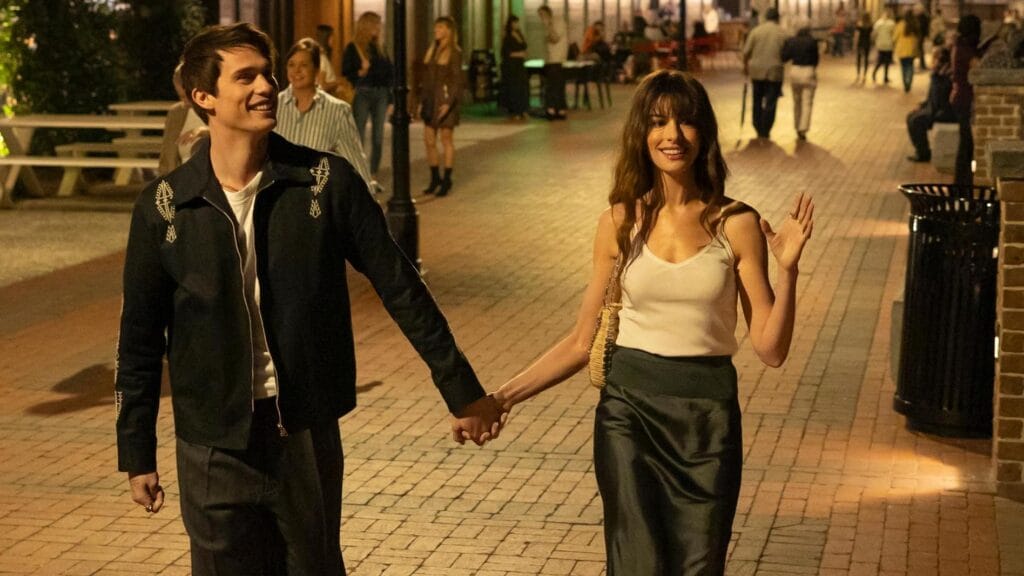
These adaptations vary in quality and tone, but none of them quite capture the heady feeling of reading an excellent romance novel. They all miss the mark by shying away from accusations of being softcore porn by demurring to other, more established screen genres—the period piece and the primetime soap for Bridgerton, the romcom for RW&RB, and the Nicholas Sparks-esque romantic drama for The Idea of You. So you can imagine my giddy amazement when I tuned in for the first few episodes of Heated Rivalry to find that showrunner Jacob Tierney had completely nailed it.
I have not read any of Rachel Reid’s Game Changers novels, so I cannot speak to how closely the show sticks to the source material. I can say without hesitation, however, that Heated Rivalry expertly translates the thrill of reading a romance novel to the screen. Like a romance novel, the scope of the show stays incredibly narrow, focusing almost exclusively on Shane and Ilya. Scenes of the two of them alone and alone together dominate the show. Their world feels literally empty save for each other; Shane and Ilya are often the only characters in the frame, their bodies the only bodies in large, otherwise conspicuously unoccupied spaces. Supporting characters float in and out of episodes mainly to help Shane and Ilya realize that they can’t live without one another. Nothing really matters to the plot besides the feelings, sexual and otherwise, that these two characters develop for each other. Even the hockey is ultimately pretty inconsequential.
At first, Shane and Ilya’s relationship is almost entirely sexual. They are aware of each other as professional rivals, both rising star players who could feasibly become legendary ones. When they meet, sparks fly, and they eventually, clandestinely give in to their sexual desires. They go for years sexting and hooking up a few times a season, when their teams play each other. The first two episodes of the show consist mainly of these hook up scenes, which establish Shane and Ilya’s connection.
The sex scenes manage to be unambiguous without veering into anything hardcore. Blowjobs, handjobs, and penetration happen just outside of the frame. There’s notably no full-frontal male nudity. Masturbation is shot from the back or with a thigh strategically propped up. Fittingly for an adaptation of text-based smut, part of what makes these scenes feel so explicit is the way the characters discuss sex. These boys are chatty in the bedroom. How Shane and Ilya ask each other for what they want makes the sex scenes seem more frank. While Williams and Storrie certainly bare a lot of skin, the visual emphasis in the sex scenes remains for the most part on the actors’ faces. These reaction shots keep us grounded in the particular experiences of the characters and help to foreground their emotions.
When talking to Vulture about the importance of getting the sex scenes in the show exactly right, Tierney explained, “Sex is their [Shane and Ilya’s] language, their way of communicating.” Tierney clearly understood, when adapting the source material, that the sex scenes are integral to the love story. At least until episode five, the majority of Shane and Ilya’s character development happens in the sex scenes. It matters what these characters do to each other in bed (and on the sofa) and how they do it. By the time Shane and Ilya finally admit that they might want more than just sex from each other, it’s already obvious to viewers that they’re in love because the sex scenes are just so good. Romance novel logic.
In an interview with David Mack for Slate, Reid and Tierney both spoke about why they think the show’s explicit sex has been key to its unexpected success. Reid stuck close to the Romancelandia party line, saying that it’s important to see “explicit sex that’s joyful and sweet and romantic and hot and fun” in a media landscape largely devoid of sex scenes that aren’t “horrific rape scenes.” Tierney put it in terms of “respect[ing] existing fans,” explaining how he followed his instinct to ignore executives’ notes about toning down the books’ sexual content to widen the show’s appeal. He expounded, “These books are porn! You think the audience is here despite that? They’re here for this. This is what they want.” God bless you, Jacob Tierney.
It remains to be seen if the Heated Rivalry phenomenon will finally move the needle on Hollywood’s reluctance to fully embrace romance novels on their own pornographic terms. As much attention as the female fans of Heated Rivalry have gotten (cue the fujoshi explainers), I’m still not sure that the show’s popularity will be taken as proof positive that what women like about romance novels is the sex. Tierney created the show knowing that the “secret fanbase” of women would be larger than any fanbase of queer men, but I think “secret” is the operative word here. Would a show squarely targeted at women who desire men still be this horny? This explicit? This sexy? Could a creator pitch a show with a female lead who enjoys sex as much as the male leads of Heated Rivalry without getting major pushback? Are there enough female actors willing to do explicit sex scenes in a post-Me-Too climate? I don’t know that we currently live in that world, but any Hollywood exec who can see the vision has millions of female romance readers shouting “Take my money!!” at their beck and call.