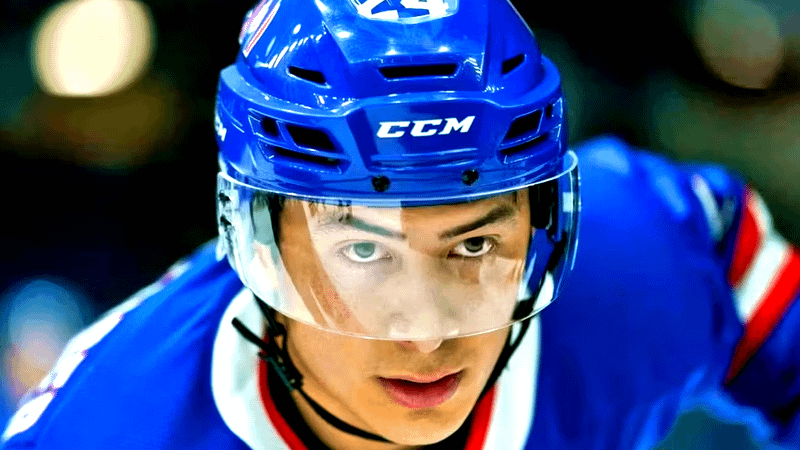
The era of sex-averse entertainment has finally been penetrated. Heated Rivalry, a Canadian show that recently arrived on HBO, has dominated screens with sweaty, gay, hockey sex. Directed by Jacob Tierney, the show is an adaptation of the Game Changers book series by Rachel Reid, following characters Shane Hollander (Hudson Williams) and Ilya Rozanov’s (Connor Storrie) enemies-to-lovers romance as rival-hockey-players-cum-lovers. The show is ripe with analysis in its representations of explicit sexuality, gay representation, and spectrums of masculinity, especially in the jock world. It even stars a white and Asian – colloquially known as Wasian – character. But while there are bubble butts and blowjobs aplenty, the same can not be said for meaningful Asian representation.
In the book and show, Shane is the half-Japanese, half-Canadian beating bottom heart of the couple. In Reid’s books, this racial background is not frequently mentioned, save for when physical descriptions of the character are required. Tierney, with the help of Reid as a contributing producer, incorporates more explicit references to Shane’s Asian-ness on screen. But these added referential interventions are rudimentary, and at times even random. Every time Heated Rivalry invents ways to ask Shane about his Japanese identity in the show, they have him merely shrug in response.
In the first episode, Shane is interviewed after a game about his rising success as a star rookie player. A news anchor asks him, “What do you think about being compared to Tiger Woods and Serena Williams? Do you think you share any of the same challenges?” This would be perfect time to address microaggressions he may have faced or acknowledge feelings of otherness as a Wasian person in a predominately white sport, right? This seems like the very purpose of including such a line, right? Wrong. Shane responds, “I don’t really think about stuff like that.” It’s a puzzling and dismissive answer for a show that made a conscious decision to call more attention to the character’s ethnicity.
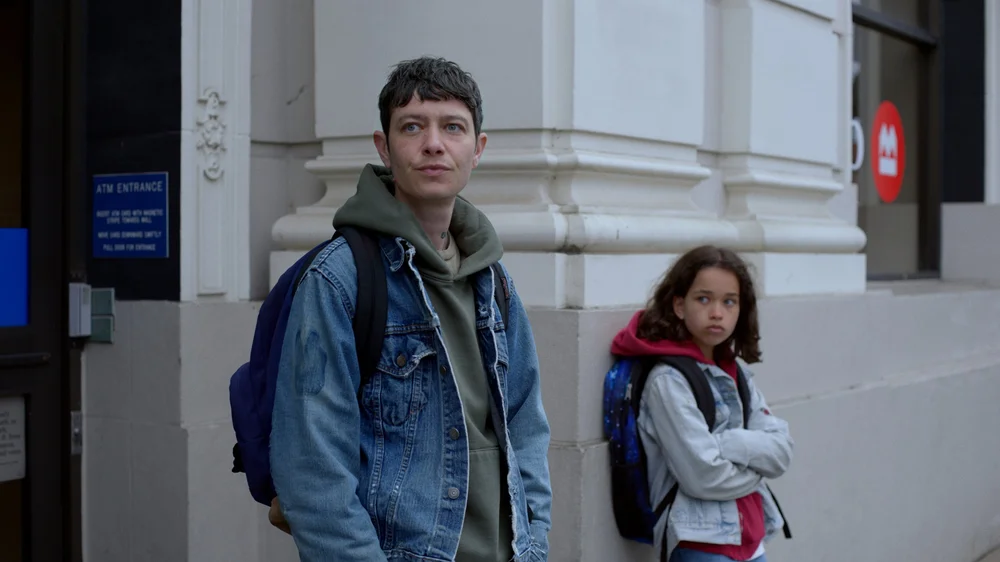
Strangely, it’s always someone other than Shane that insists upon his Asian identity while he withholds his own feelings about his race, as if Shane and people of color can only be defined by their oppression. When Shane meets Rose Landry, played by Sophie Nélisse, she reminds him of his otherness: “I bet being the only Asian kid didn’t make it less intense.” Again, Shane shrugs it off. He was the one of two Asian boys playing hockey, and so teasing was relegated to the other, more Asian-passing one. Perhaps the line could be a recognition that one’s proximity to whiteness was a shield of sorts, but we’ll never know. Shane doesn’t divulge any feelings or thoughts about being Japanese. Each time there’s an opportunity to hear more about it — which the creators go out of their way to incorporate — the show fails to derive any meaning, introspection, or interiority from it. We’re breadcrumbed, edged toward potential insight into how being a person of color shaped Shane’s experience, but are always left wanting.
This isn’t just a missed opportunity, but a hollow representation of an Asian character. Despite how the show insists on Shane’s otherness, we fail to hear about how it informs his character development. It’s a bizarre, lopsided choice, especially when much of the series is dedicated to exploring how Ilya’s Russian background informs his hesitancy to let Shane in. We’re reminded about how hard it is to be a queer person in Russia. We see Ilya’s brother call him homophobic slurs. We meet his dad, a man enmeshed in Russian politics with high standards and more traditional beliefs.
Then, there’s the issue of casting. Though Williams’ character is half-Japanese, the actor himself is half-Korean. Shane’s mom, played by Christina Chang, is also meant to be fully Japanese, but Chang is half Taiwanese-Filipino. If the show really cared about Asian representation, it wouldn’t cast Asian people as if they were all interchangeable for one another.
It would have been nice to see even a little bit of how Shane’s Japanese heritage informs his character. Does his prioritization of privacy relate to Japan’s emphasis on societal codes? Is his anxiety about coming out bolstered by the fact that he would be further alienated as not only an Asian player but also a gay one? On the flipside, the show could have let his Wasian background be just that: background. Instead, the middle-ground paved offers only half-hearted attempts at acknowledging racism. At best, this is evidence of Reid and Tierney’s inability to write Asian characters. At worst, it’s a failing attempt to check off the DEI box without doing a modicum of research.
In the first episode, the manager of the Montreal hockey team tells Shane and his parents, “Just to be clear, we are thrilled that Shane is Asian or Asian-Canadian.” To the accustomed eye, the line is empty lip-service extolled by big brands and institutions. It’s perhaps even how the showrunners intended the line to be read. But by the end of Heated Rivalry, the show’s surface-level identity politics rings just as hollow as a sports team claiming to “break barriers.”