What is the difference between trauma porn and accurately depicting trauma on screen? At which point do we draw a line between the exploitation of suffering and art? Take 1997’s Funny Games. It’s one of the most brutal and unflinching displays of taboo violence that exists in the (somewhat) mainstream. Its purpose, according to director Michael Haneke, is to force the viewer to confront their relationship with violence and film. It’s hard to watch, yes, but is it not also entertaining? Can and should we feel okay with whatever titillation we derive from watching two preppy psychopaths torture and kill a family just for fun? Is this not the sign of a great societal sickness?
Go to a repertory theater, and if a David Lynch film is playing, you’ll very likely encounter a higher than usual number of women in the crowd. When he left this realm a few months ago, the internet was aglow with warm memories of Lynch and his work, from fans and collaborators alike. And despite all the incest, physical abuse, and sexual assault he puts to the screen, you’d be hard-pressed to find a male filmmaker with a more devoted female following. Perhaps his female fanbase exists, in part, because of the manner in which Lynch presents and handles these taboo, difficult, and traumatic experiences. In line with Haneke’s critiques of violence on-screen, is it not wrong to depict some of the most depraved acts imaginable for the purpose of entertainment? It’s a tight line to walk, but I think few have done the dance as well as Lynch.
Not typically one to guide us to the “correct” conclusions, Lynch gives a double middle finger to those who had the wrong takeaway from the original run of Twin Peaks. Sure, it’s soapy, corny, and mostly about teenagers. But to focus on the beauty of Audrey Horne (Sherilyn Fenn), the “aw, shucks” nature of the locals, or even the sexy mysticism of Agent Dale Cooper (Kyle MacLachlan) is to ignore the context in which this all exists. Twin Peaks is a dark-as-a-moonless-night tale about rape, abuse, incest, and intergenerational trauma. It seeks to explore the “evil that men do,” which, by the way, is a Mark Frost contribution, but who’s counting? The beauty of the American small town is something Lynch loves to highlight, especially in contrast with whatever darkness he’s chosen to unearth in whatever work we’re diving into. The coffee and the cherry pie and the dreams and the cable-knit sweaters make this stark horror easier to swallow. They’re important aesthetic pieces to this puzzle, but they’re there to counter the heavy weight of sexual violence.
In late 2014, the long-rumored third season of Twin Peaks was announced. Instagram stories had not yet been invented, but Tumblr (RIP) was set ablaze. My feed was a sea of reposts of stills of Billy Zane as John Justice Wheeler, gifs of David Lynch saying “now THAT’s the kind of girl who makes you wish you spoke a little French,” and of course, heavily filtered photos of black coffee and cherry pie. “See you in 25 years,” promises Black Lodge Laura Palmer (Sheryl Lee). Perhaps we should’ve paid attention to who gave us this warning. The Return says “fuck fan service.” We drop back into Twin Peaks, a small town in the new century, ravaged by drug addiction, questionable politics, and dreams put on hold. We are punished for holding onto quirky quotes about that gum you like coming back into style, and instead plunged head-on into a Francis Bacon nightmare. The charm and charisma of Dale Cooper is withheld from us for almost its entire run–instead we’re left with the crooked Mr. C and the infantile Dougie Jones. When we finally do get our Cooper back, everything is different. “Once we cross it could all be different.” Hell, if we didn’t get the point from that, we learn in Episode 8 that the force of evil that could cause one teenage girl all this pain is borne of the first test of the atomic bomb in White Sands, NM. Extreme evil begets extreme evil.
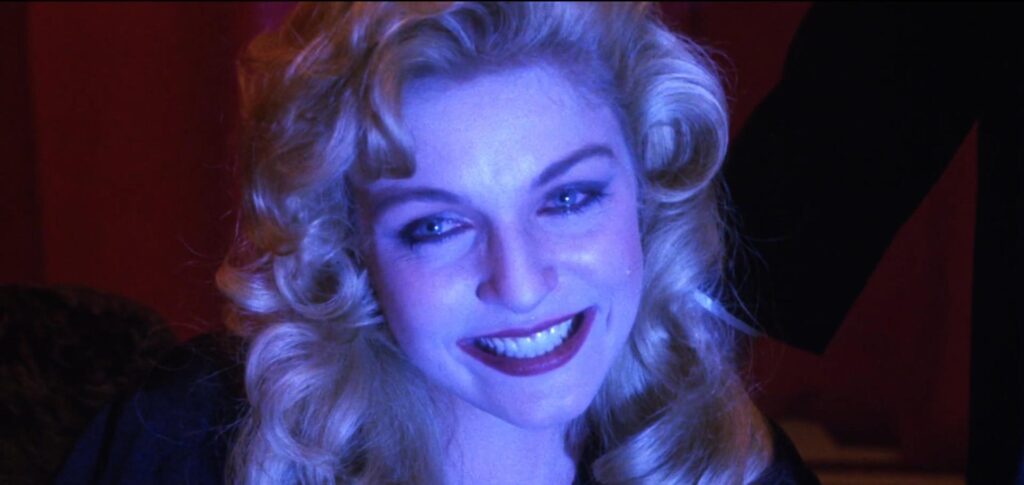
Fire Walk With Me is a both beautiful and harrowing subversion of the dead girl mystery. Where most shows start with the body and move forward, Lynch gives Laura Palmer an entire film so that we may better understand her humanity. Through Sheryl Lee’s earth-shattering performance, Laura becomes much more than a portrait of a homecoming queen, or a girl wrapped in plastic. We don’t get much of the quaint Twin Peaks we see in the show here; instead, we see the world through the eyes of Laura Palmer. High school heartbreak, the desire to be understood, cocaine, sex work, and abuse color her world. The mere fact that Lynch took this two-season television show and reverse engineered Laura’s last days shows the amount of care he had for this character, this poor girl who has had more traumas visited upon her than the average heart could bear.
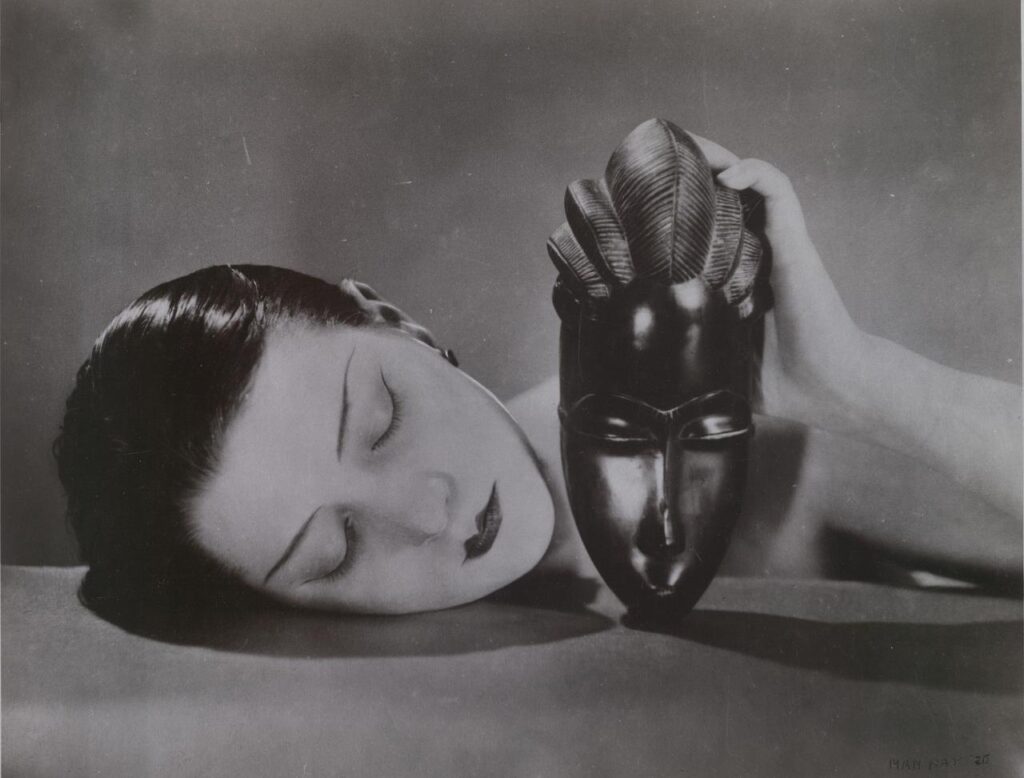
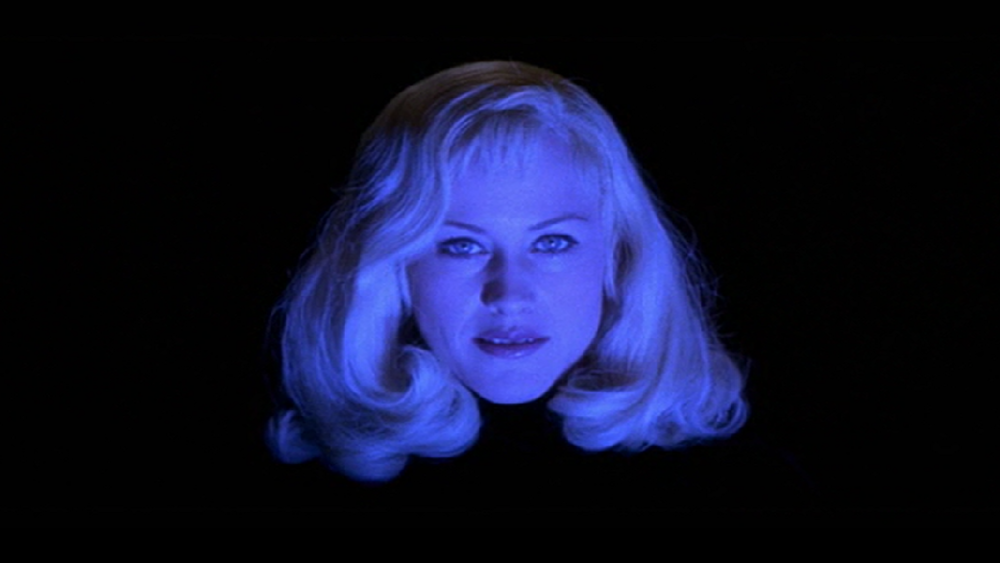
In that special Lynch way, Lost Highway and Mulholland Drive are the blonde/brunette duo of his filmography. Where Lost Highway is nu metal, Mulholland Drive is 50s and 60s pop. Mulholland Drive is candy-colored, full of wonder, and soft even in its harshest moments. It’s a deeply feminine film. I’m always jokingly referring to Lost Highway as “Mulholland Drive for boys,” but there’s a kernel of truth in there. It really is a very masculine film, what with the nu metal, the autobody shop, and of course, the Bill Pullman sax fantasy. However, when you unzip its leather jacket exterior, you find a story about femininity and the way it can drive men to madness. Patricia Arquette’s Alice/Renee embody feminine mystery (albeit in its own inverted way); Renee every bit the vampy, Betty Page-banged wife who wears pleasers as her house slippers, and Alice as the innocent blonde with perfectly wind-tousled hair and a secret. The story morphs from one thing to another; Bill Pullman inexplicably turns into Balthazar Getty, and Renee reappears as Alice. Lynch, in rare moment of mild exposition, described the film as a “psychogenic fugue:” essentially a state of temporary amnesia that causes one to forget their entire being. It is total (impermanent) dissociation. The entire world seems to splinter after the slaying of Fred’s (Pullman) wife Renee, and his imprisonment for her murder signals the beginning of all the narrative slippage to come. It’s only by the film’s “end” (is there ever an ending when the narrative is itself a mobius strip?) that we come to realize the true cause of all the bloodshed. Pete (Getty) and Alice make love one final time, beautifully set to This Mortal Coil’s cover of “Song to the Siren.” Pete keeps repeating “I love you” as the music shifts to big, nightmarish strings. She stops thrusting just long enough to whisper in his ear, “You’ll never have me.” Pete, the innocent, boyish, and stupid surrogate that Fred has created to cope with his actions, disappears, and Fred returns. The exercise is over, the root cause of this “psychogenic fugue” has been unearthed. He’s been unable to cope with his wife’s sexual desires and her role as his wife; he cannot reconcile the image of her as a sex worker when he wants to possess her fully. Lynch does not dabble in doubles in an empty homage to Hitchcock, he fully embodies them. Fred bisects himself in an attempt to cope with the multitudes his wife contains–but it’s not enough. He must bisect her, both physically and figuratively. Hell, look at the work of the surrealist Man Ray. His most famous art depicts the manipulation and mutilation of the female form. It’s long been the goal of “the artist” to tame and control the feminine. Man’s foolish desire to own the woman he loves is his undoing, and sadly, hers too.
This concept is refracted and thrown over the rainbow in Wild At Heart. Lynch’s road romance by way of The Wizard of Oz follows Sailor (Nicolas Cage) and Lula (Laura Dern), two lovers on the run from the forces of evil. Lula possesses a beautiful childlike innocence, almost calling back to Dern’s Sandy Williams in Blue Velvet. She’s young, wide-eyed, and speaks with a saccharine-soaked Southern drawl– and she’s got a jealous, domineering mother to stoke that childish streak in her, for better and for worse. But she’s no Southern belle; in fact, she’s almost the opposite. She almost never shows up without red lipstick, often wearing a silk teddy over tights or a leather bra with capris and kitten heels, cigarette delicately balancing on her lips. She loves powermetal, Elvis, and having sweaty, nasty, beautiful sex with Sailor. I honestly hesitate to call it just “sex” when it’s something so much more transcendent and yet so base at the same time. But Lynch doesn’t punish her for sexual appetite, nor the way it might not gel with her girlish nature. Not to speak too much to the ending of the film, but she and Sailor are both rewarded for being wild at heart.
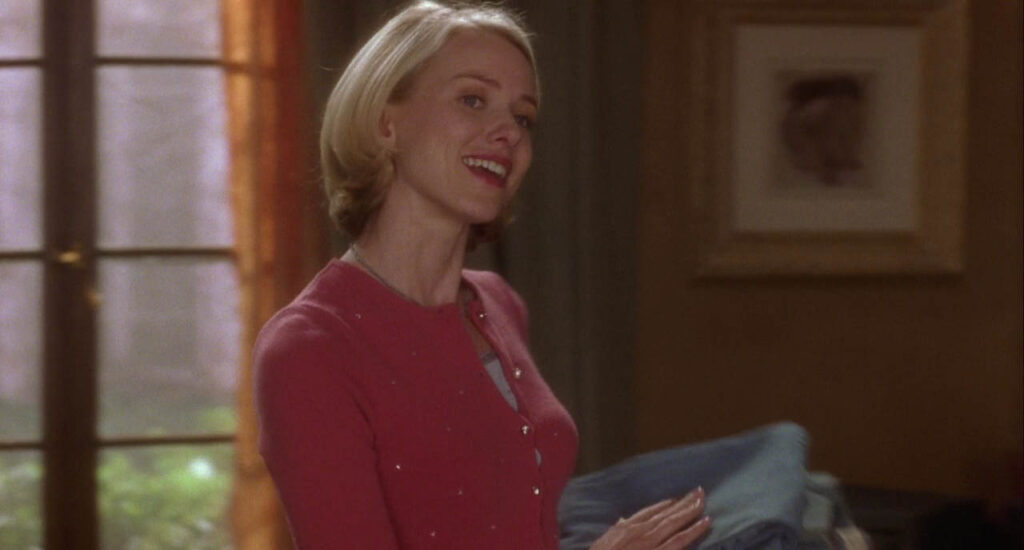
It’s rare that a male filmmaker passes and not one person, especially an actress, has a negative thing to say about him. For a man to put so much feminine suffering on screen, in all its horror and nakedness, with so much empathy, should not be as rare as it is. A man like Roman Polanski is able to accidentally stumble into making a feminist horror film like Rosemary’s Baby due to the fact that he doesn’t see her suffering as uniquely female – he rationalizes his disparate beliefs by putting himself into Rosemary Woodhouse’s shoes as someone who is unfairly targeted and persecuted, full stop. Lynch has had a small number of men stand in for him in his work, from Jack Nance, to Bill Pullman, to Kyle Maclachlan. But by the time he makes Mulholland Drive, he has switched to Naomi Watts. Betty/Diane arrives in Hollywood from her small town with big dreams and a certain aw-shucks nature that’s almost impossible to separate from Lynch’s own persona. However, he doesn’t just transpose what is typically a male character onto a story about women. Through this film, Lynch puts himself squarely in Naomi Watts’ perfectly square-toed Nine West pumps, perhaps better understanding the particularly insidious way that Hollywood tears its women apart better than almost any other man.
To exploit suffering and to aestheticize it are two different things. David Lynch, ever the alchemist, had the ability to turn exploitation and suffering into beautiful art, but he had the discerning nature never to aestheticize the abuse. This is the reason his films present us with some of the most beautiful imagery and also some of the absolute ugliest. That the two can coexist in the same works speaks to Lynch’s understanding of the mysterious nature of our world, and I think that’s a core tenet of femininity. It has nothing to do with the color pink, or lip gloss, or power suits; it’s about persisting in a world that has constantly told us that we are always in danger. He was a beacon for us in a world that’s wild at heart and weird on top. And without him? Well, now it’s dark.