
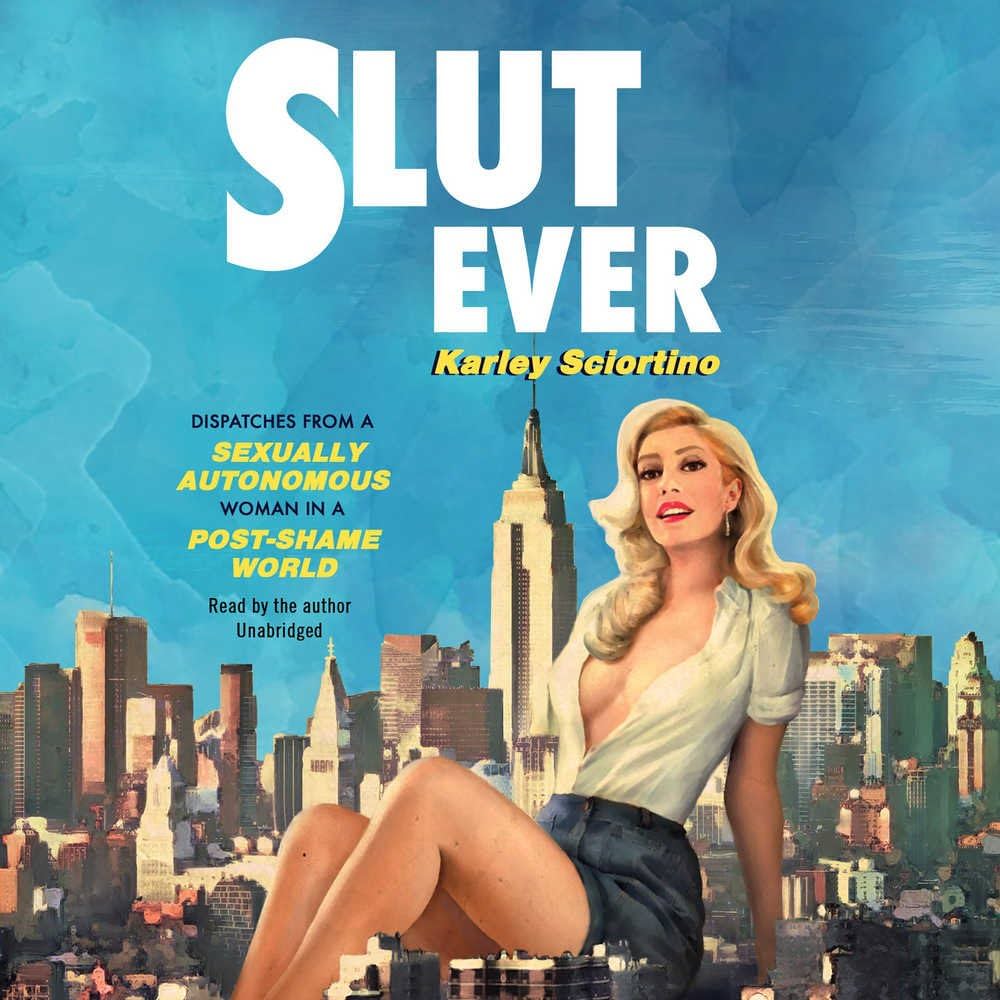
In high school, I consumed Karley Sciortino’s “Slutever” series on VICE with a hot-cheeked fervor. I hadn’t had sex yet, nor had I even begun to write about it. All I could manage was to daydream about the steps someone might take to get even close to the places Sciortino ventured into in her sexually exploratory VICE web series. She was my idol. Her work wasn’t in the clinical style of pop feminism sex-ed so en vogue in the mid-2010s. Sciortino always seemed genuinely curious, and often excited, about the sexual niches she covered. This was convenient because while technically expanding my academic understanding of sex, “Slutever” would also often turn me on. This was an ideal intersection for me, a very nerdy and very horny teenager. I loved that “Slutever” had a “beginner’s mind” POV: Sciortino was never a deer in headlights, but she often let the expert in question — a director of Mormon porn or a facilitator of female masturbation circles — take the lead. In turn, Sciortino would openly express excitement, nervousness, pleasure, and hesitation.
Sometimes, Sciortino would play traditional journalist: she’d interview a sugar baby on a park bench or a pony play enthusiast in his stable with all the composure of Diane Sawyer. But sometimes she would partake in the sexual niche she was investigating. These dispatches were always my favorite. In “Making The World’s First Male Sex Doll”, Sciortino actually has sex with one of the dolls on camera. Through some carefully choreographed shots, the event, miraculously, passed YouTube obscenity standards. This was, as you can imagine, huge for perverts the world over. To me, Sciortino has always been, the real fucking deal.
My biggest struggle in writing about sexuality and gender is my desire to mask everything with a professional sheen, lest I be accused of being too earnestly or obviously desirous of what I’m writing about. Some of this fear stems from the aforementioned era I was raised in; the sex-positivity of the 2010s that helped essentially form me in the best ways, but also held very prescriptive ideals. Consent could be simple, automatic, and rigid, and you could devour enough YouTube videos, sex-ed Tumblr pages, and professional kinkster blogs to get a good grade in having good sex. In turn, you could get a bad grade in having bad sex, and could be shamed online for a sex take that was not en vogue. I have mentioned this internal dilemma of mine a lot. It’s becoming boring to me. Karley Sciortino’s 2018 book, Slutever: Dispatches from a Sexually Autonomous Woman in a Post-Shame World, offered me some answers and even revelations regarding my hesitations.
In the opening manifesto of Slutever, Sciortino says about slutdom at large:
“If I want to reap the benefits of slutdom, I have to have a thick skin. If I want sexual freedom, I have to be able to say no. Slut power is about freedom, but it’s also about taking responsibility. The world is not a safe space. There is no such thing as safe sex.”
The sentiment — an openness to risk for the sake of slutdom — seems true to her ethos regarding sex journalism as well. Sciortino is endlessly curious, and Slutever follows both her personal and professional thirst for understanding. She takes a hands-on approach — extended time shadowing a dominatrix, for example, turns into Sciortino’s own foray into BDSM sex work for a couple of years. When she doesn’t have the answers herself, Sciortino turns to a vibrant gallery of sex workers and sex writers.
This is one of my favorite aspects of Slutever. Sciortino references an incredible buffet of sexual texts. I am now desperate to get my hands on Norma Jean Almovodar’s Cop to Call Girl (who, as the title suggests, quit the LAPD to become a sex worker), Vamps & Tramps by Camille Paglia (a writer my girlfriend was personally offended I was not familiar with already: “How have you been writing about what you write about?”), Lesbian Choices by Claudia Card, Venus in Furs by Leopold von Sacher-Masoch’s (father of the “M” in S&M), and the work of Dr. Carol Queen. Through both the interviews included in Slutever as well as the many sexy and perverted texts referenced, Sciortino reveals that you don’t have to have a perfect, encyclopedic knowledge in order to develop your personal sexual ethos — there are others to turn to for your various cultural gaps as you plow onward.
Sciortino uses the word “glamorous” almost a dozen times in Slutever, to describe things like professionally peeing in men’s mouths or her roommates’s full-service sex work escapades. These things really are glamorous to her, even when they are also sometimes nasty or scary or taboo. She’s comfortable with the fact that some of her sexploit stories will end in satisfaction and amazement and others will end in disinterest or even distaste. Her approach is to revel in the vast diversity of sexual expression anyways, to believe that just about anything is worth a shot. In my favorite portion of the book, Sciortino writes,“You can be a hedonist and still have composure”. To do so, Sciortino outlines, is to follow this basic code:
“Composure in the bedroom isn’t about putting restrictions on yourself, or only fucking missionary or whatever — it’s about knowing how you want to fuck, making autonomous decisions, and getting the most out of sex.”
Slutever was written in 2018, and it shows. There is the occasional sentiment that is so of-its-time (yes, it’s been less than ten years, but sex culture can move very, very fast) that they jolt one out of Sciortino’s otherwise very hip perspective. A nod to Chelsea Handler as a shining example of hot slutdom, a lot of talk about representation in film and television as a cure to our systemic phobias, and a mention of finding “they/them” pronouns totally crazy, are so 2018 that they almost hurt. The culture now has shifted to more nuance in some senses (a wider selection of sexual icons, pronouns, ways of feeling seen) and more reactionary responses in others (especially regarding the 2010s “you do you” attitude around casual and kinky sex). The culture around sex is always shifting, because sex is such a prominent part of life. To write about it is to accept that there will be social shifts in the future, and to try to keep your pulse solely on what’s current.
But for the most part, Slutever remains exciting, even seven years later. One of my favorite theses in Sciortinio’s book is her belief that bad sex is something that’s totally okay, normal to experience and crucial to own up to and shake off. “The point is,” Sciortino writes, “there are far worse things in life than bad sex (like a hangover, for example)”.
Slutever’s general sexual value system — a combination of hedonistic composure, full-throated autonomy, and acceptance of some social risk — has been a sacred reminder for me. My fear of being accused of a horny perversion driving some of my work could very well occur (in some cases, this accusation would be true!), but my goal isn’t ultimately to write acceptable, terminology-heavy, drivel. It’s to write in earnest about what interests me and what I think is important in our modern sexual culture, regardless of how I am perceived by a more conservative outset. Maybe fear of doing it “bad” is getting in the way of both my performance of and my writing about sexual pleasure and desire. Maybe there’s some safety in claiming to be just a curious journalist instead of a curious journalist and a little pervert. I wonder, now, if that puts me in the same category as those adages about blocked film critics who should really be making their own movies or those who don’t do turning to teaching. I don’t want that for me — I like to do!
As I read Slutever (actually, listened to — there’s a wonderful audiobook read by Sciortino in her low, sexy, cool girl voice), I felt myself becoming sexually inspired. What can I do, as me, with the sexual curiosities and sexual opportunities I have, to know myself better and share with more bravery?
In her chapter called “Harnessing My Slut Powers”, Sciortino writes about how she would sometimes blog about certain artists regularly in an attempt to seduce them:
“My theory was that, since everyone has a Google alert for their name, if you blog about someone enough, they will eventually see it. And if you seem desperate enough, they will eventually fuck you.”
Maybe I’m writing about this book and my light crush on Karley Sciortino a bit late. I am still getting my sex writing sea legs, after all. But who knows, maybe her Google alerts are still on.