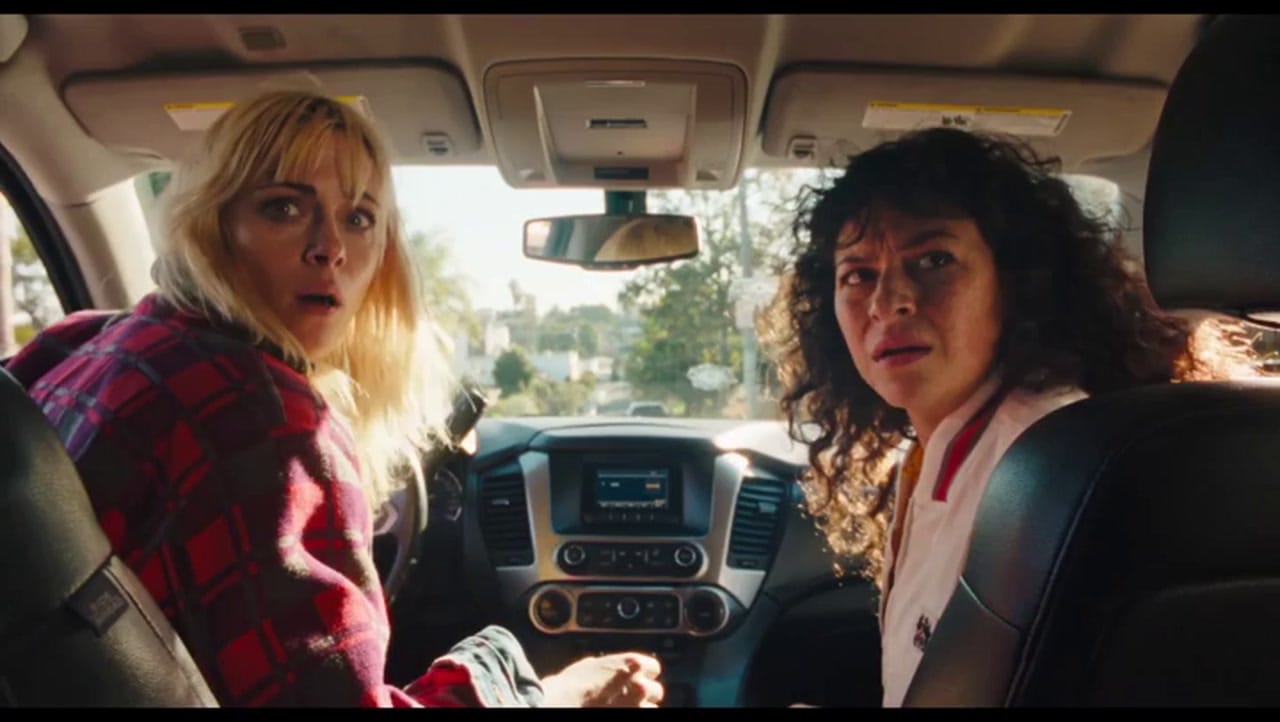
In Costa-Gavra’s 1982 film Missing, a young, politically active journalist named Charlie (John Shea) goes missing during his final days reporting on a military coup in Chile. His father, Ed (Jack Lemmon), rushes to Chile to attempt to find his son, but he’s constantly stymied. Chile is in a state of upheaval, the United States Embassy is unhelpful, and Ed has no idea how to maneuver the country or its culture or its systems. He’s in hell, the unknown question of his son’s fate haunting him in a strange and alienating land.
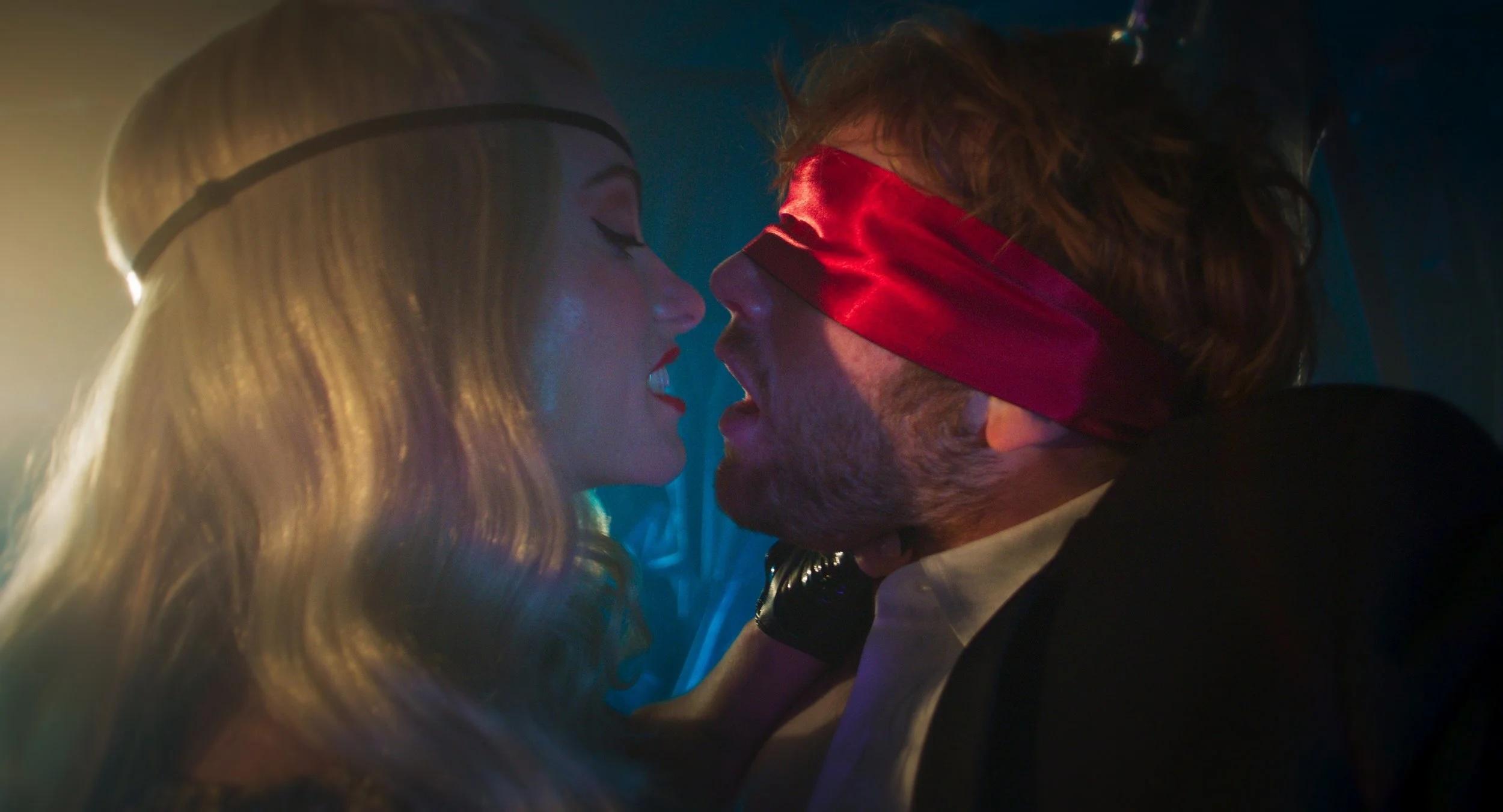
In the earliest moments of Lee Cronin’s The Mummy, we see glimmers of Missing. A journalist, coincidentally (?) also named Charlie (Jack Reynor), is preparing to move back to the United States after a stint of reporting in Cairo. Charlie, his pregnant wife, Larissa (Laia Costa) and their two children, Katie (Emily Mitchell) and Sebastian (Dean Allen Williams), are moving to New York City for Charlie’s new, cushy, breakfast hour hosting gig. This is the plan before Katie is abducted through a gap in their garden fence by a mysterious woman. No one in the family has any clue where she went, or why she was taken. The movie wants us to care. I wish I did.
I can imagine a world where Lee Cronin’s The Mummy is good. In this imaginary world, Cronin maintains the same finesse for gore and familial oogies he exhibited in his Evil Dead reboot, Evil Dead Rise. It’s a world where Charlie and Larissa take an active hand in unravelling the mystery of their daughter’s whereabouts, where the family stays in Cairo instead of returning to New Mexico (why?) , and, a lá Missing, where they battle against a foreign legal, social, cultural, and spiritual system they don’t understand. It’s a world where the parts assembled onscreen might make a comprehensive whole.
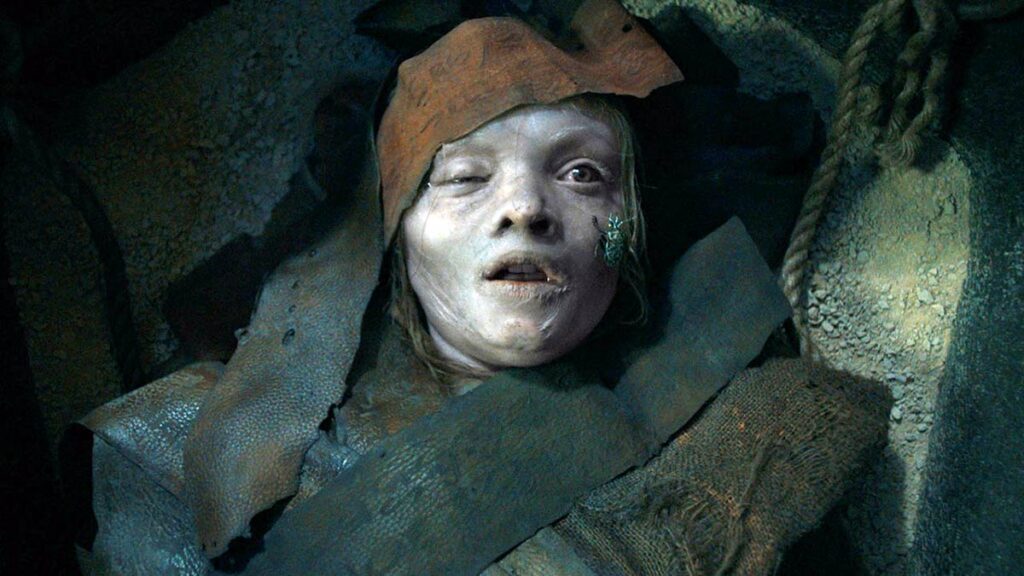
Instead, the family (a loosely-formed and poorly-interconnected mass) returns to Larissa’s family home in Albuquerque to live with Larissa’s mother, Carmen (Verónica Falcón, providing life where she can). After eight years of suburban calm, Katie (now played by Natalie Grace) is discovered in an ancient sarcophagous, technically alive but deeply changed. She is, as the title suggests, a mummy. Kind of.
Lee Cronin’s The Mummy is deeply incurious. The fact that Katie’s father is a foreign correspondent and that her mother works in healthcare — two seemingly very helpful areas of expertise if your daughter vanishes in a foreign country and returns eight years later a freaky little creature — fall essentially to the wayside. Most of the discoveries are instead made by Dalia Zaki (May Calamawy) , a Cairo detective. She’s compelling and tireless in her investigations, but isn’t this movie about families?
The Mummy skirts near one interesting-ish thought: as audiences grow tired of people in horror movies being too stupid to leave their clearly haunted homes, would making the haunted object a beloved child provide a better justification for sticking it out? (The Exorcist got there first, obviously. More on that later). But here Cronin’s aforementioned lack of curiosity strikes again. The film gives us no insight into how anyone in the family feels at all about each other or Katie (minus some vaguely-weirded out stares from the sorely-underused sibling characters). These unknown interior drives are obscured even further by the poor performances of Reynor and Costa, who respectively opt to bug their eyes out or bow the corners of their mouth to imbue any negative feeling, from shock to sadness to revulsion.
Lee Cronin’s The Mummy is, more than anything, a campfire tale of poorly-reheated nachos: the kind that get that crunchy, sticky skin on the top, probably not dissimilar in mouthfeel to Katie’s inked-up skin strips. A brief listing of shamelessly and unskillfully ripped bits from other films, off the top of my head: all of Katie’s convulsing, floor puking, and wall crawling: The Exorcist. All of the morse code tapping (particularly when done between a human and a monstrous-partial-human separated by a box): Let the Right One In. Scenes of hieroglyphic decoding by a skeptical professor are so shopworn they range from Wishmaster to Sinister II. The assumption of the missing beloved’s horrific fate (and in a coffin at that!) at the picture’s end is directly from The Vanishing. And (perhaps most blatantly), after Katie kills her grandmother with her various mummy magic powers, Carmen returns as what can only be described as a dollar-store Deadite that Cronin dusted off from the deleted scenes of Evil Dead Rise.
All this to say, the greatest curse of Lee Cronin’s The Mummy’s is not whatever causes Katie to get all crusty (her crust, it has to be said, is one of the film’s highlights), but instead the malediction that befallsnearly every genre film suffering from first-draft syndrome and borrowing too heavily from its predecessor. I’m not just bored, I’m not just dissatisfied; I’m reminded of about a dozen other films I’d rather be watching. Stop the tomb, I wanna get out!