Chandler Levack is one of my favorite voices working in Canadian cinema right now (actually, cinema in general, but she is specifically keeping CanCon great). I had the pleasure of talking with her about the balance of the personal and the artistic, the tonal value of a good sex scene, online cultural criticism at its peak, and Mile End Kicks’ iconic “Chekov’s herpes”.
To read our original review of Mile End Kicks from TIFF 2025, click here.
VERONICA: I love your story structure so much, but I also know you are sometimes working in the mode of personal experience and autofiction. How do you find balance in editorializing something that you’ve experienced?
CHANDLER: God, I don’t know. I feel like with Mile End Kicks, it was the second screenplay I ever wrote. I think I love Save the Cat and three-act story structure. As dorky as some of those beats are, I do think they are the fundamentals of what to expect from a movie. So I guess I do think about those plot points, but then I’m always just extrapolating what happened to me onto it. So it’s a lot of remembering stuff and then seeing where it fits into the narrative.
VERONICA: It sounds like you’re able to kind of work backwards almost.
CHANDLER: I guess so, yeah. I guess it’s more organic. Like the first time I ever had a panic attack was in a Blockbuster break room and they wouldn’t let my mom come in and I did have to talk through the door [referencing a scene in I Like Movies]. So I thought about that, but I wasn’t like, “Oo, that’s a good break into Act 3”, you know? It’s funny I haven’t written a screenplay in like five years so I don’t even remember [starts laughing] how to do it. But it was also just watching a lot of movies for Mile End Kicks and asking, “What are the hallmarks of a good romcom?” Like ill-timed confessions of feelings where one person confesses too early and the other isn’t ready to hear it. Or I love when someone is telling off the wrong guy. It was a lot of just breaking down the plot of Bridget Jones Diary or Reality Bites and being like, “OK, how can I transpose these beats that are very satisfying when I see them into what actually happened to me or what didn’t happen to me but felt like it could’ve happened.”
VERONICA: What I love about I Like Movies and Mile End Kicks is that I feel like they’re about the creative process, but specifically the part of the creative process in your early 20s where the idea of creating and of yourself as an artist is so exciting, but the actual process of creating can be so much less fun than just being twenty-two and running around. Do you think of that kind of fucking around phase as part of the creative process?
CHANDLER: I think Annie Baker said — this is completely me misremembering this — that all the times that you fuck up and do the jobs you hate and all the things that you resent become the material you get to have to write about. If nothing ever happens to you and you never make mistakes, like people who just went to film school, were the darlings of their film school, got a short into Sundance, made a feature — they don’t have anything to write about. I think it’s the same for actors, like if you just only grew up on set and only know being on a movie how can you really draw on anything to create a character?
VERONICA: That’s such a weird thought, like you’re basing this performance on the last time you were pretending.
CHANDLER: Yeah. It is weird, I guess, making stuff that’s so close to the bone and then people are like, “Oh this is a one-to-one documentary of who you are.” And I’m like, “No, it’s still a movie and it’s heavily fictionalized.” But it’s not at the same time, it’s also deeply personal. It’s weird to spend three or four months debating what’s real and what’s not.
VERONICA: It’s weird, I find especially in anything that’s autofictional, people really want to find the exact truth of something. But sometimes I’m like, “Does it matter? I’m not offering this information to you in court.”
CHANDLER: Yes! And I think they only do that kind of litigation to women. Nobody’s doing that to Mike Mills or Noah Baumbach, they’re just giving those guys a huge pat on the back and saying, “Thank you for being vulnerable and honest!”
VERONICA: I want to talk about the sex in the movie, because I really like it. Did you have a goal for how you wanted it to come across? I find it to be realistic — or well-observed is the word I’d like to use — but it still tonally matches the film.
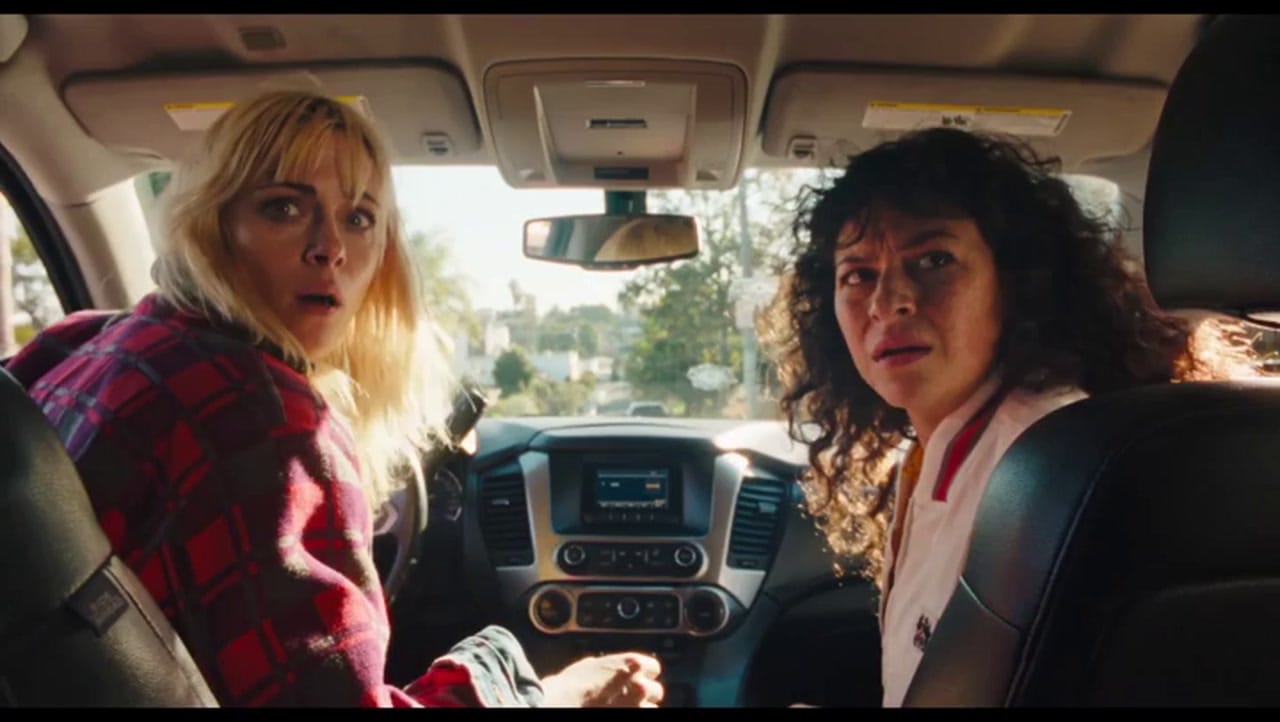
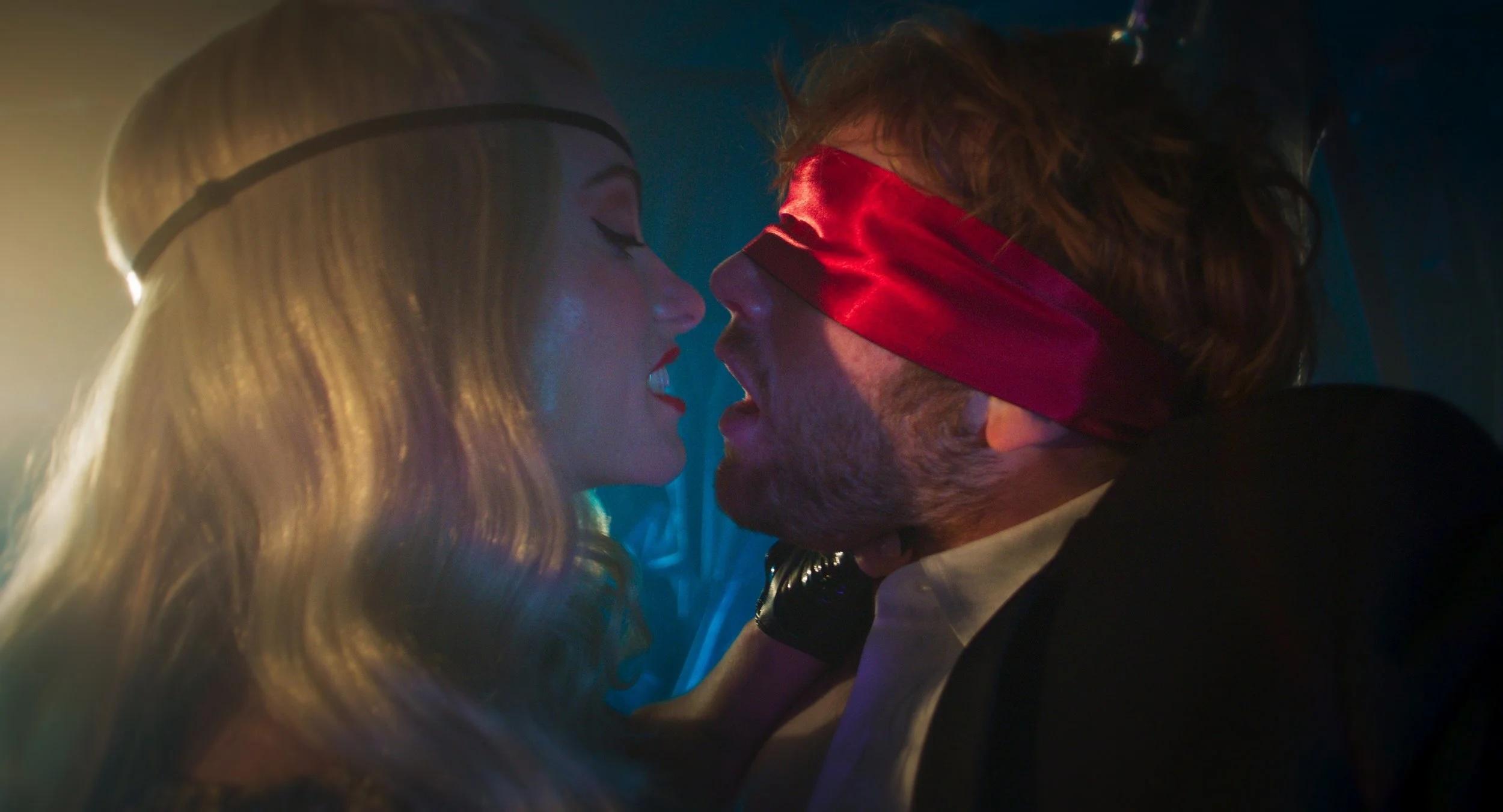
CHANDLER: I was scared, because other than Lawrence [in I Like Movies] masturbating to Spartacus and being walked in on by his mom, there isn’t really any kind of sex in that movie. We didn’t have an intimacy coordinator for that scene, we just kind of shot it. So [Mile End Kicks] was a little bit terrifying. There’s four sex scenes, at least two of which are quite graphic. I worked with an intimacy coordinator, Mo Matton, and we just very carefully blocked the scenes without any touching, almost like a dance or something. We watched a lot of sex scenes from Girls. With a cinematographer or production designer or producers you always have tonal references, but no one ever talks about the tonal references for sex scenes. And I thought the blocking of those sex scenes in Girls is so exquisite and realistic and natural but also privileges the character’s point of view. […] I think the best sex scenes can be a really strong illustration of what a character wants or power dynamics or what characters think about each other. It’s funny that people just see them as gratification when they’re really like … scene. A lot of the sex I was having in my early 20s was not embodied. It was entirely based in like, “Oh well, if we have sex I can calm down.” I didn’t feel chill about the relationship unless we had sex. Even when it was clearly with people who were not interested or we had already broken up, I just needed that validation. It is weird. I just felt really insecure. […] I think I unfortunately have the sexuality where I like like one person a decade, it’s really hard for me to have casual sex and I find this hookup culture really alienating. I was interested in examining this character kind of through her sexuality. Of all the problems she has, that’s certainly one of them — she certainly doesn’t have a fulfilling sex life.
VERONICA: Did you always know it was going to end the way it did? With the herpes kiss?
CHANDLER: Yeah. It’s Chekov’s herpes. I find it beautiful because it’s kind of what true love is. We have to absorb each other’s metaphorical herpes. I think it’s kind of beautiful that the best kiss of your life could possibly give you an STD. […] It was funny, though, I remember when we were in the edit stage, like almost at the final cut, all of a sudden one of the financiers was getting really nervous about it. They were like, “We need to cut this out.” And I was like, “But that’s the whole movie!” And they were like, “No, it’s gross.” Why didn’t you say this at any other point? Like, now we have to VFX out a herpes sore? I don’t wanna do that! And this moment is what makes it special from every other climactic kiss in any other romcom. I like that it was subverting the expectation of the genre.
VERONICA: The production and costume design is so good. What did you do to make it seem genuinely like 2011?
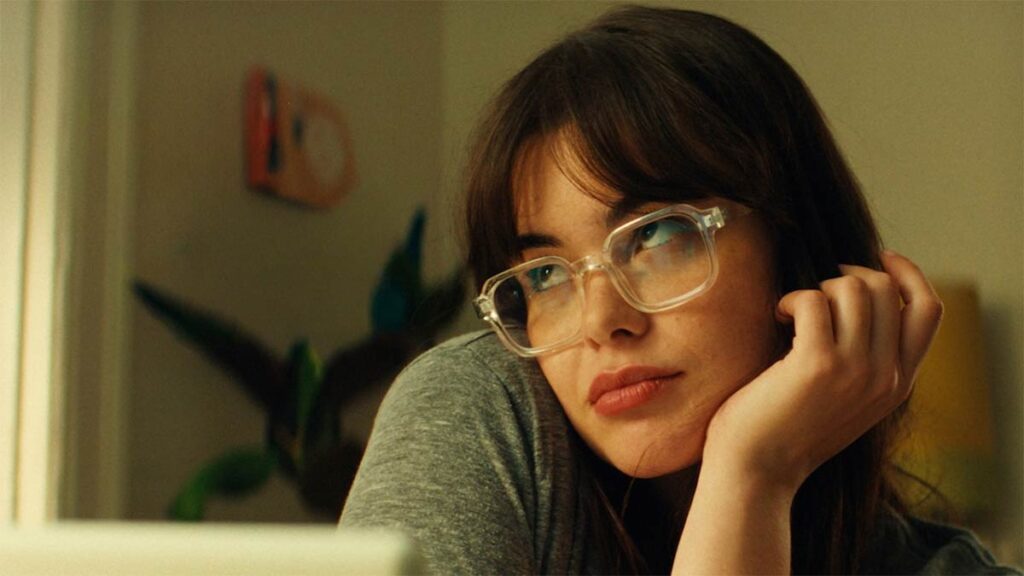
CHANDLER: Thanks! I worked with two really brilliant people, my costume designer Courtney Mitchell did I Like Movies and she’s just an extreme genius and managed an American Apparel in Montreal in 2011. So I think she was excited because it was her adolescence, too. We found a lot of old pictures of us on Facebook and dug through the archives and party photography at that time and old American Apparel magazines and VICE articles… She just would reach out to everyone she knew in Montreal. She’d go to landfills that had old clothing. She found an archive of vintage American Apparel from this, like, Qubecois tailor. […] All the details had to be so specific. And some of the details were written into the script, like the TOMs and the owl necklace. And then my production designer Jess Hart is an extraordinary artist and did what people in Montreal do which is go to thrift shops. […] A lot of the locations I’d written into the script were the real places where I’d experienced a lot of this stuff, so it was fun to shoot it where it actually happened and then recreate some stuff and then find some new locations that felt like they would have existed in 2011. […] When I was about to make the movie a lot of people would say to me, “Oh there’s so many screens, how are you going to make that interesting?” But it was actually so emotional. Every time you see [Grace, played by Barbie Ferriera] like, drafting an email on old Gmail or having her iTunes playlist named “If I Ever Had Sex”, I hadn’t seen that stuff in so long. All of that stuff is really powerful. I think our relationship to old technology is very emotional. […] I think culture has accelerated so much, especially when we’re talking about analog media. The idea of having an EP launch and getting your fans through traditional press has absolutely no relevance now. But that sort of taste-making power of being a music critic and the little foothold you have in the culture is, like — It feels like a career where now I may as well have been a candlestick maker.
VERONICA: What do you miss and not miss about 2011?
CHANDLER: I miss meeting people in real life, organically, like at shows. I’m sure all those places exist but post-pandemic we’re maybe more reluctant to just spend time in the real world.
VERONICA: And you have to fight to find it, which I find really depressing.
CHANDLER: Yeah, I mean that was such a time of like, “Oh, do you want to go to this poetry reading by the train tracks?” And you’re really curious about the world and your experiences and going outside yourself. Now everyone would rather line up for an hour for a matcha latte. And I also just miss writing about art. It was so fun to write about things that I really loved and interview people that I admired and have these foundational conversations. A lot of those interviews that I did informed my sense of art and creativity in a way that I’m still thinking about. It was a really cool experience to have at such a young age.
HIGH FEMME RAPID FIRE:
HF: What’s your biggest time suck online?
CL: Everything. Instagram, Twitter, Facebook. Any videos where someone is, like, eating the best hamburgers.
HF: Favorite curse word?
CL: Um. There’s a baby nearby. [softly] Probably fuck.
HF: Favorite perverted thing?
CL: John Waters.
HF: A sex discourse you wish you could ban?
CL: What does that mean?
HF: Favorite book from childhood?
CL: Weetzie Bat by Francesca Lia Block.
HF: Song of the summer? .
CL: “It’s Not Just Me, It’s Everybody” by Weyes Blood.
HF: Do you call it a journal or a diary?
CL: Journal, but I’m not really a journal or diary person. I have a weirdly obsessive memory.
HF: Person dead or alive that you would ask to dinner with the sole purpose of getting to throw a drink in their face?
CL: Hitler???
HF: Ideal nap length?
CL: Oh, man. If I go to take a nap I’m out for four hours, usually.
HF: Best time to write?
CL: Before you look at your phone, if possible.
HF: Worst place to edit writing?
CL: I wrote and edited a lot of articles in the A&W across from my old Toronto apartment. I can kind of edit anywhere.
HF: Any opinion about any movie ever?
CL: I’ll just say what my grandmother said about The Seven Samurai. Make sure this is in a Maltese accent. [in a Maltese accent] There are seven samurai, and they all have a story to tell.